



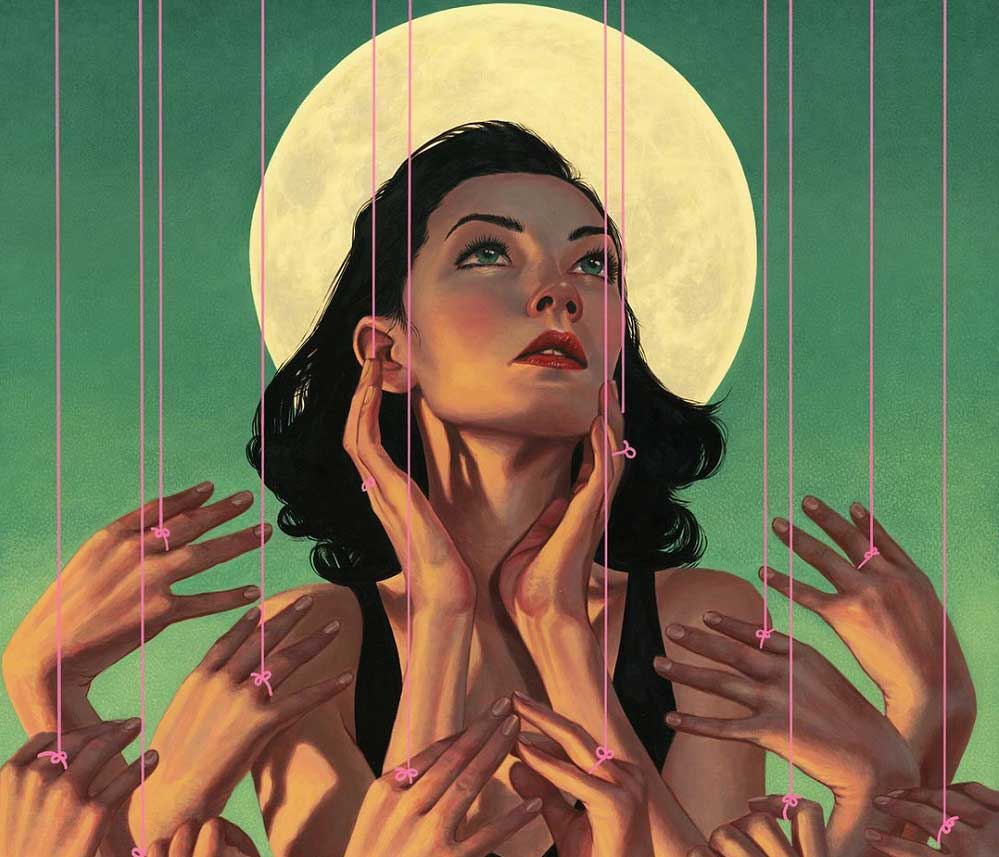

In the vibrant tapestry of contemporary art, few names resonate with the evocative power and vivid imagination of Casey Weldon. As an aficionado and chronicler of the art world’s ever-evolving landscape, I’ve been drawn time and again to Weldon’s work, finding myself ensnared by the captivating realms he creates. His artistry, rich with emotion and complexity, invites viewers into a world where the boundaries between love, fear, and nostalgia blur, creating a space that is at once familiar and utterly fantastical.
Introduction to Casey Weldon’s artistry
Casey Weldon’s journey as an artist is as compelling as the creations that spring forth from his palette. Born and raised in the United States, Weldon honed his craft with a dedication that saw him graduate from the prestigious Art Center College of Design in Pasadena. It wasn’t long before his distinctive style, marked by a masterful blend of surrealism and photorealism, began to capture the attention of both the public and critics alike.
Weldon’s artistry is not just about creating aesthetically pleasing images; it’s about storytelling. Each brushstroke, each color, each shadow plays a role in weaving narratives that are deeply personal yet universally relatable. His ability to explore the depths of human emotion, juxtaposing the light with the dark, the whimsical with the profound, positions him as a unique voice in the contemporary art scene.
The essence of Weldon’s work lies in its ability to evoke a visceral reaction. Whether it’s a sense of wonder, a pang of nostalgia, or a shiver of fear, his art leaves no one untouched. It is this emotional resonance that sets Weldon apart, making him not just an artist but a conjurer of feelings and memories.
Exploring the themes of love, fear, and nostalgia in Casey Weldon’s work
Delving into Weldon’s oeuvre, it becomes evident that love, fear, and nostalgia are not just themes but the very foundation upon which his art is built. His exploration of love is multifaceted, ranging from the romantic to the platonic, from the joyous to the melancholic. Weldon’s paintings often depict moments of intimacy and connection, bathed in ethereal light that seems to emanate from the subjects themselves, suggesting that love, in all its forms, is a luminous force in a shadowed world.
Fear, on the other hand, is portrayed with a subtlety that is chilling. Weldon skillfully uses surreal elements—unnatural colors, distorted proportions, and eerie settings—to evoke a sense of unease. His representations of fear are not overt; they whisper rather than scream, nudging the viewer into a realm where the familiar becomes menacing, and comfort gives way to disquiet.
Nostalgia, perhaps the most poignant of Weldon’s themes, permeates his work like a gentle sigh. Through his art, Weldon beckons us back to a past that is at once personal and collective. His use of iconic imagery from pop culture, meshed with scenes from everyday life, creates a bridge between the viewer’s own memories and the universal experience of longing for times gone by.
The influence of pop culture on Casey Weldon’s art
Pop culture serves as both muse and medium for Weldon, offering a rich tapestry of symbols and stories that he deftly incorporates into his work. From classic television shows and movies to iconic characters and imagery, Weldon’s art is a love letter to the pop culture that has shaped generations. This infusion of pop culture not only makes his work immediately accessible but also layers it with meaning, allowing for a dialogue between the art and the viewer that is both intimate and expansive.
Weldon’s ability to transform the familiar icons of pop culture into something wholly original is testament to his creative genius. He plays with context, placing well-known characters in unexpected scenarios, thereby challenging our perceptions and inviting us to see the world through a different lens. This reimagining of pop culture icons serves to both celebrate and critique the media-saturated environment we navigate daily.
The influence of pop culture in Weldon’s work also speaks to the theme of nostalgia, acting as a catalyst for the viewer’s own memories and emotions. In this way, Weldon not only pays homage to the cultural touchstones of the past but also uses them as a vehicle for exploring the deeper, more personal realms of love and fear.
Casey Weldon’s unique artistic style and techniques
Weldon’s artistic style is a mesmerizing blend of the surreal and the hyper-real, a trait that distinguishes his work in the crowded field of contemporary art. His meticulous attention to detail and masterful use of color create images that are both striking and subtle, inviting close examination and contemplation. Weldon’s technique, particularly his use of light, imbues his subjects with an almost otherworldly glow, further enhancing the ethereal quality of his work.
Beyond his technical prowess, Weldon’s style is characterized by a playful yet poignant exploration of themes. He has a unique ability to balance whimsy with weight, crafting images that are at once thought-provoking and visually delightful. This duality is perhaps most evident in his use of animals as central figures in many of his pieces. By anthropomorphizing these creatures, Weldon taps into a rich vein of symbolism, using them to explore complex human emotions and experiences.
Moreover, Weldon’s incorporation of surreal elements into realistic settings challenges the viewer’s perception of reality. This juxtaposition of the ordinary with the fantastical creates a dissonance that is both intriguing and unsettling, compelling the viewer to question the nature of existence and the constructs that define our reality.
Analyzing specific artworks that embody love, fear, and nostalgia
Among Weldon’s extensive body of work, certain pieces stand out for their profound exploration of love, fear, and nostalgia. One such piece is “Twilight,” a hauntingly beautiful painting that captures the fleeting moments between day and night. In this work, Weldon uses the interplay of light and shadow to evoke a sense of longing and melancholy, embodying the essence of nostalgia.
Another notable piece is “Guardians,” which depicts two ethereal figures enveloped in a protective embrace. Through this work, Weldon explores the theme of love as a sanctuary, a refuge from the storms that rage around us. The use of soft, luminous colors further accentuates the sense of warmth and security, making “Guardians” a poignant meditation on the power of love.
“Fear Not,” on the other hand, delves into the realm of fear with a subtlety that is both eerie and compelling. In this painting, Weldon portrays a lone figure standing at the edge of an abyss, the darkness looming ominously. The tension between the known and the unknown, the seen and the unseen, encapsulates the essence of fear, inviting the viewer to confront their own anxieties and uncertainties.
The emotional impact of Casey Weldon’s art
The emotional resonance of Weldon’s art is undeniable. Through his exploration of love, fear, and nostalgia, Weldon taps into the core of the human experience, eliciting reactions that are as varied as they are intense. It is this emotional depth that draws viewers back to his work, compelling them to explore the layers of meaning and emotion that lie beneath the surface.
Weldon’s art serves as a mirror, reflecting our own experiences, fears, and desires. It invites introspection, encouraging us to delve into the recesses of our own hearts and minds. The connection that is forged between the viewer and the artwork is both personal and profound, a testament to Weldon’s ability to speak to the universal human condition.
Moreover, the emotional impact of Weldon’s art is amplified by its visual beauty. The allure of his images, with their intricate details and vibrant colors, captures the imagination, transporting the viewer to a world where the boundaries between reality and fantasy blur. This fusion of aesthetic appeal and emotional depth makes Weldon’s art a powerful force, capable of moving, inspiring, and transforming those who encounter it.
The connection between Casey Weldon’s art and the viewer
The relationship between Weldon’s art and those who experience it is dynamic and evolving. Each viewer brings their own perspectives, memories, and emotions to the encounter, resulting in a unique interpretation of the work. This interactive aspect of Weldon’s art is central to its appeal, allowing for a multitude of readings and responses.
Weldon’s use of familiar imagery, coupled with his exploration of universal themes, creates a sense of immediacy and connection. The viewer is drawn into the narrative, becoming a participant in the unfolding drama. This immersive quality is one of the hallmarks of Weldon’s work, blurring the lines between artist, artwork, and audience.
Furthermore, the emotional impact of Weldon’s art fosters a sense of empathy and understanding. By confronting us with our own fears, desires, and memories, Weldon’s work encourages us to reflect on our shared humanity. This connection, both intimate and collective, is a powerful reminder of the transformative potential of art.
Casey Weldon’s rise to prominence in the art world
Weldon’s ascent in the art world is a story of talent, perseverance, and vision. From his early days as a student to his current status as a celebrated artist, Weldon has remained true to his unique voice, continually pushing the boundaries of his craft. His dedication to exploring the complexities of the human experience, coupled with his technical skill and creative imagination, has garnered him a dedicated following and critical acclaim.
Weldon’s work has been featured in prestigious galleries and exhibitions around the world, solidifying his position as a leading figure in contemporary art. His ability to navigate the delicate balance between commercial success and artistic integrity is a testament to his commitment to his craft and his vision.
The recognition Weldon has received is not just a reflection of his talent but also of his ability to connect with a wide audience. His art speaks to the zeitgeist, tapping into the collective consciousness with its exploration of love, fear, and nostalgia. This relevance, combined with his distinctive style and emotional depth, has propelled Weldon to the forefront of the art world.
Collecting Casey Weldon’s artwork
For collectors and enthusiasts, acquiring a piece of Weldon’s art is not just an investment in a physical object but a foray into the rich emotional landscape that his work embodies. Each painting, with its intricate details and vibrant colors, is a portal into Weldon’s captivating realm, offering a glimpse into the depths of the human psyche.
Collecting Weldon’s artwork is also an opportunity to support an artist whose work challenges, inspires, and transforms. It is a testament to the power of art to evoke emotion, provoke thought, and foster connection. For those fortunate enough to own a piece of Weldon’s art, it is not just a possession but a cherished companion, a source of continual discovery and delight.
Moreover, as Weldon’s prominence continues to grow, his artworks have become highly sought after, making them not only a source of aesthetic pleasure but also a wise investment. The enduring appeal of his work, coupled with its increasing value, makes collecting Weldon’s art a rewarding endeavor on multiple levels.
Conclusion: The enduring appeal of Casey Weldon’s captivating realm of love, fear, and nostalgia
Casey Weldon’s artistry is a beacon in the contemporary art landscape, illuminating the complexities of the human experience with a blend of whimsy, melancholy, and beauty. His exploration of love, fear, and nostalgia, infused with the influence of pop culture and rendered in a unique style, has captured the hearts and minds of viewers around the world.
The emotional depth and visual splendor of Weldon’s work, along with his ability to connect with a diverse audience, ensure that his art will continue to resonate for generations to come. As we journey through Weldon’s captivating realm, we are reminded of the power of art to move, to challenge, and to heal.
In the end, Casey Weldon’s art is more than just images on a canvas; it is a reflection of our deepest fears, our fondest memories, and our most profound desires. It is a testament to the enduring appeal of love, fear, and nostalgia, and a celebration of the human spirit in all its complexity.